Home · Christmas & New Year Pet Hazards
🎄 Christmas & New Year Pet Hazards: 8 Dangers to Keep Away From Dogs & Cats
December packs a lot into a few weeks. A tree goes up in the living room, glass balls hang at nose height, chocolate hides behind little cardboard doors, and then fireworks cap it all off on New Year's Eve. Most of it is harmless fun. Some of it sends pets to the emergency vet every single year. Here are the eight hazards worth knowing about before the decorations come out of the box — plus what to do if one of them happens anyway.
Published November 3, 2026. Seasonal guide.
AI-assisted review by the Eaoae editorial team. ✓ Sources checked by the Eaoae Safety Review · 2026-11-03 · Based on independent veterinary sources
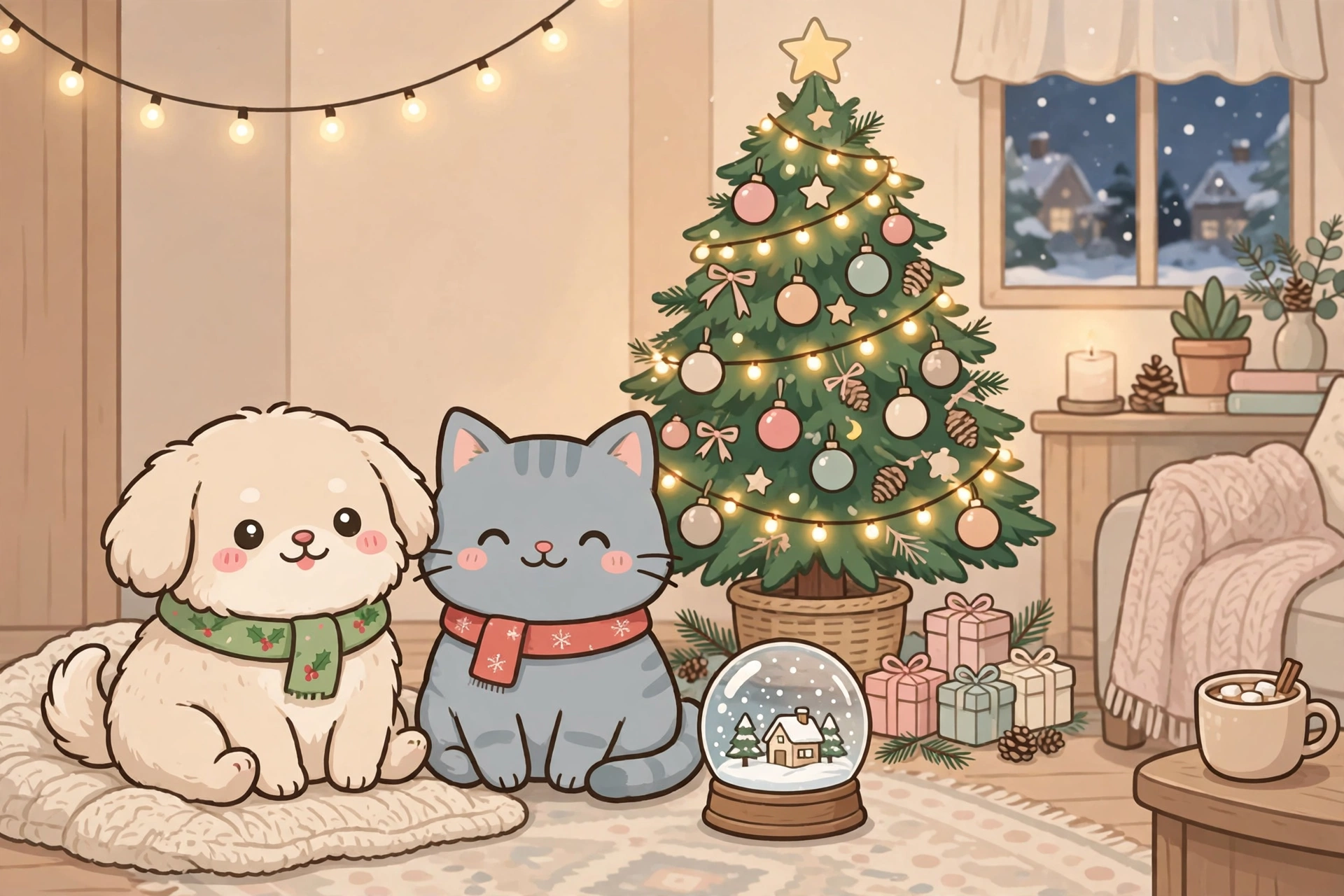
1. Snow Globes (Ethylene Glycol)
This is the one most people miss. Some snow globes — imported ones especially — aren't filled with plain water. They contain ethylene glycol, the same chemical in antifreeze, and it tastes sweet. Crack one on a hard floor and a cat or dog will often lap at the puddle before you've even found the dustpan. It doesn't take much: as little as a teaspoon of concentrated antifreeze can kill a cat. And the early signs look deceptively mild, even drunk-like, before kidney failure sets in a day or two later.
- Watch for: wobbly, "drunk" walking, drooling, vomiting and unusual thirst in the first hours; a quiet patch where your pet seems better (the damage is still happening); then lethargy, loss of appetite and little or no urination as the kidneys fail.
- What to do: get your pet away from the spill, wipe liquid off paws and fur so they don't groom it off, and call your vet or a poison helpline right away — don't wait for symptoms. Antidote treatment works only in the first few hours, so speed matters more here than with almost anything else on this page. Keep globes on high, stable shelves, well away from table edges.
Check: is antifreeze (ethylene glycol) safe for cats? →
2. Tinsel & Ribbon
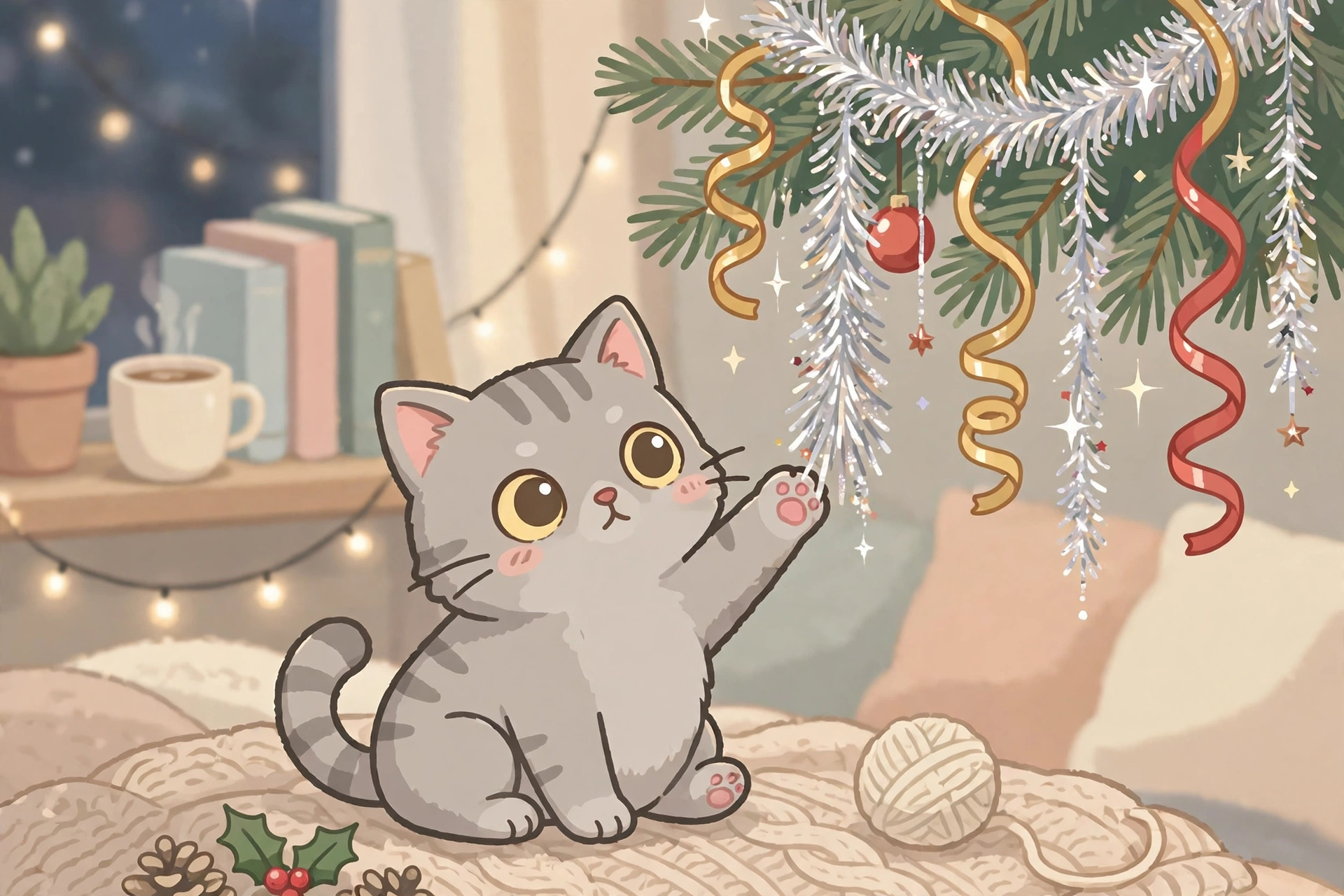
Tinsel isn't poisonous. That's exactly what makes it easy to underestimate. Swallowed strands don't dissolve or pass through neatly — they anchor at one end while the gut keeps trying to move them along, so the intestine bunches up like fabric on a drawstring and can tear. Vets call it a linear foreign body, and cats are the usual patients. Curling ribbon on wrapped gifts, garland strands and even the string on a roast do the same thing.
- Watch for: repeated vomiting, loss of appetite, hiding, a painful belly, straining — sometimes a day or more after the chewing happened.
- What to do: if you see tinsel or string hanging from your pet's mouth or rear end, don't pull it. Ever. It may be wrapped around tissue inside. Trim nothing, tug nothing, and go straight to the vet. The simplest fix is skipping tinsel altogether in a cat household — paper garlands don't land anyone in surgery.
Browse all dog safety checks →
3. Christmas Tree Water
A tree stand looks, to a thirsty pet, like a water bowl that somebody thoughtfully placed at floor level. Plain water that's been sitting for a week grows bacteria, and plenty of households add things to it — commercial preservatives, fertilizer, sugar, even aspirin — none of which belong in a pet. One lap usually means nothing worse than an upset stomach. A pet that drinks from it daily, or one that gets into aspirin-laced water, is a different story.
- Watch for: vomiting, diarrhea, drooling or loss of appetite after drinking from the stand.
- What to do: use plain water, skip the additives entirely, and block the bowl — a tree skirt, a cover, or a small barrier around the base all work. Refill with fresh water rather than topping up week-old water. If your pet drank water you know had aspirin or preservative in it, call your vet and say what was added.
Browse all cat safety checks →
4. Ornaments, Hooks, Lights & Button Batteries
The tree itself is a small obstacle course. Glass ornaments shatter into shards that cut mouths and paws. Metal hooks get swallowed. A chewed light cord can burn a mouth or deliver a real shock. And the sneakiest item of the lot hides inside musical ornaments, singing greeting cards and light-up decorations: the button battery. Swallowed and lodged in the esophagus, a lithium coin cell starts burning tissue fast — poison specialists measure the damage in minutes, not days.
- Watch for: drooling, pawing at the mouth, mouth ulcers, coughing, difficulty swallowing, vomiting, or a pet that's suddenly off its food after chewing a decoration.
- What to do: hang breakables high and put unbreakable ornaments down low. Tape or cover cords, and unplug lights when nobody's around. Check that battery compartments on decorations screw shut, and store loose spare batteries in a closed container. A swallowed battery is an emergency vet visit now, not a wait-and-see.
Browse all cat safety checks →
5. Candles & Liquid Potpourri
Two separate risks share this card. Candles are the obvious one: a wagging tail or a jumping cat knocks one over, and you're dealing with burns or worse. Liquid potpourri is the quieter hazard. Simmering potpourri oil contains detergents and fragrances that are caustic — a cat that laps from the pot or grooms oil off its fur can end up with chemical burns in the mouth and throat, and some ingredients are toxic in their own right. Cats get hit hardest because they groom whatever lands on them.
- Watch for: drooling, pawing at the mouth, red or ulcerated gums, vomiting, difficulty breathing after exposure to potpourri oil; singed fur or a burned paw after a candle incident.
- What to do: keep candles inside stable holders, out of tail range, and never leave one burning in an empty room — flameless candles give the same glow with none of the risk. Keep potpourri pots where pets can't reach them, and wipe any spilled oil up immediately. Mouth burns mean a vet call the same day.
Browse all dog safety checks →
6. Holiday Plants — and the Poinsettia Myth
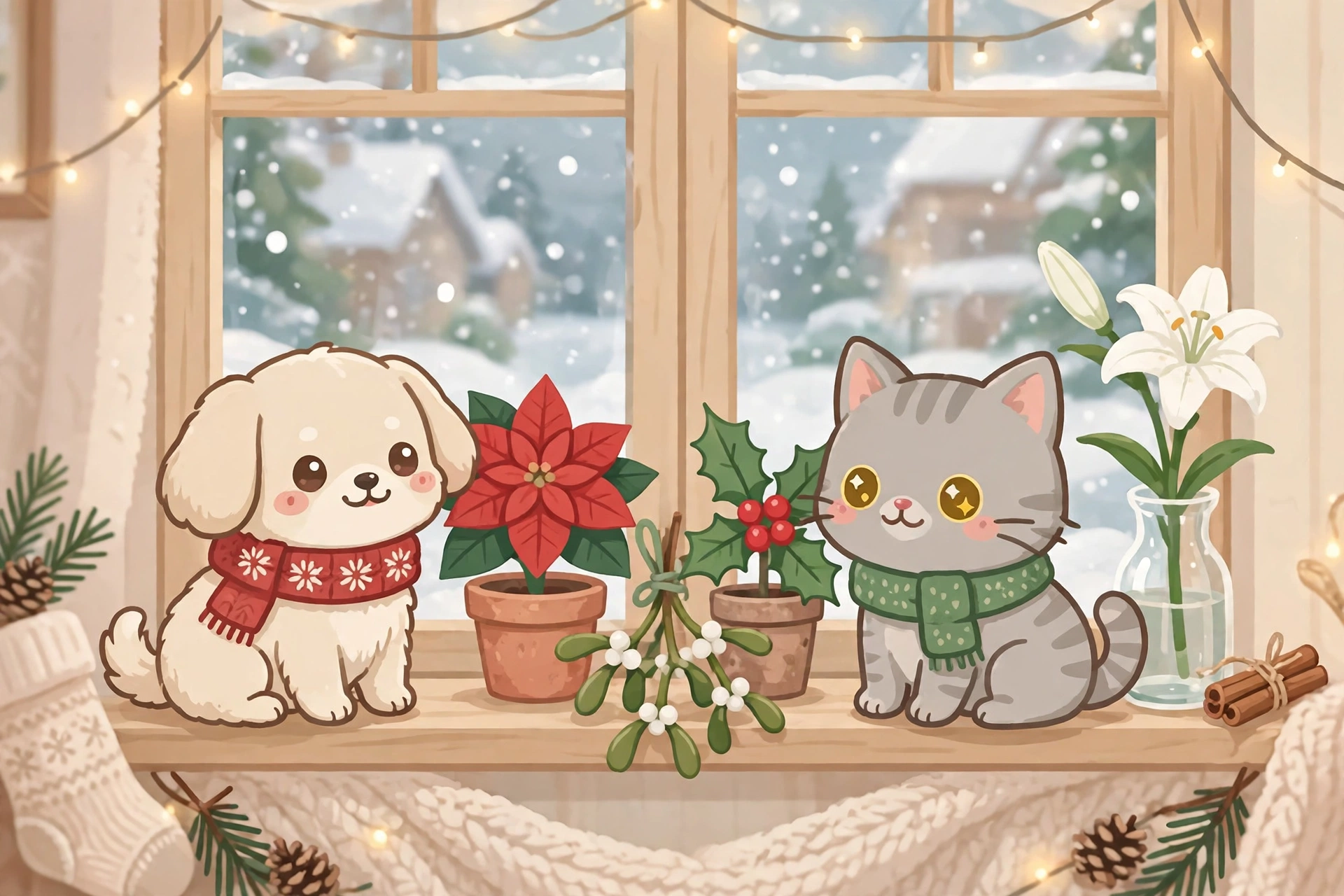
Start with the correction, because it frees up your worry budget for the plants that deserve it. Poinsettias have a fearsome reputation they haven't earned: their milky sap is a mild irritant, so a pet that chews one may drool or vomit, but poinsettia poisoning is largely a myth. Now the real list. Mistletoe and holly berries can cause significant stomach upset, and some mistletoe varieties affect the heart. Amaryllis bulbs are toxic. And true lilies — the ones in Christmas bouquets — are in a class of their own for cats: chewing a leaf or licking pollen off the fur can trigger kidney failure within days, even in tiny amounts.
- Watch for: drooling, vomiting and diarrhea after chewing any holiday plant; for lilies in cats, watch for repeated vomiting followed by lethargy and loss of appetite over the next 1–3 days.
- What to do: keep bouquets and plants out of reach, and check any arrangement a florist delivers — lilies slip into mixed bouquets without a label. If a cat had contact with a true lily, treat it as urgent even if she seems fine; early treatment is what protects the kidneys. Not sure which plant is which? Check it before it comes inside.
Plant guide: poinsettia and pets →
Plant guide: amaryllis and pets →
Browse all plant safety guides (incl. mistletoe & holly) →
7. Advent Calendars, Chocolate & Festive Alcohol
An advent calendar is, from a dog's point of view, a flat box of chocolate hung at exactly nose height, refilled daily. Chocolate's theobromine builds up in pets because they clear it slowly, and dark chocolate packs far more of it than milk. Sugar-free versions swap one poison for another: xylitol (also labeled birch sugar) can crash a dog's blood sugar within the hour and damage the liver. Then there's the party itself — eggnog, mulled wine, a guest's unattended glass on the coffee table. Pets are far more sensitive to alcohol than people, and holiday drinks sit right where a curious tongue can reach them.
- Watch for: vomiting, restlessness and a racing heart after chocolate; weakness, stumbling or collapse after xylitol or alcohol — xylitol signs can show up within 30 minutes.
- What to do: hang calendars high, keep chocolate boxes closed and off low tables, and clear glasses as the evening goes rather than at the end of it. If any of it gets eaten, note the type and roughly how much, and call your vet straight away — treatment works best before symptoms start.
Check: is chocolate safe for cats? →
Check: is xylitol safe for dogs? →
Check: is alcohol safe for dogs? →
Check: is alcohol safe for cats? →
8. The New Year Game Plan — Fireworks, Escapes & Guest Medications

New Year's Eve stacks every stressor at once: bangs and flashes outside, a house full of guests, doors opening all night. Fireworks themselves are also poisonous if chewed — unspent or spent casings contain chemicals and heavy metals a dog shouldn't be crunching on the morning after. And the guests bring a hazard nobody thinks about: handbags and coat pockets full of medication. A single dropped painkiller can be an emergency for a small pet.
- Before midnight: set up a quiet room away from windows — bed, water, a familiar blanket, some background music or white noise. Walk dogs early, before the fireworks start, and keep cats indoors for the night.
- Escapes: frightened pets bolt. Check collars and ID tags now, make sure microchip details are current, and agree a one-door-at-a-time rule with your guests.
- Medications: give guests a closed room or a high shelf for bags and coats, and do a floor sweep for dropped pills before the pets come back out.
- The morning after: clear firework debris from the yard before letting pets out, and bin leftover party food — bones, skewers and alcohol-soaked scraps included.
Browse all cat safety checks →
🆘 If you think your pet ate something dangerous
- Stay calm and act fast. Note what was eaten, how much, and when — this information saves critical minutes.
- Call your veterinarian immediately. If it's after hours, call the nearest emergency animal hospital.
- US: the ASPCA Animal Poison Control Center at (888) 426-4435 (a consultation fee may apply) or the Pet Poison Helpline at (855) 764-7661.
- Do not induce vomiting unless a veterinarian specifically tells you to — it can make some poisonings worse.
Eaoae is a reference safety checker, not a substitute for veterinary advice. When in doubt, call your vet — minutes matter with poisonings.
📚 Sources
- Pet Poison Helpline: Antifreeze (Ethylene Glycol) Poisoning in Dogs & Cats
- VCA: Ethylene Glycol Poisoning in Dogs
- VCA: Ethylene Glycol Poisoning in Cats
- Pet Poison Helpline: Winter Holiday Poisons to Pets
- Pet Poison Helpline: Tinsel
- ASPCA: Holiday Safety Tips
- National Capital Poison Center (Poison Control): Pets and Holiday Hazards
- PDSA: Dangerous Christmas Decorations for Pet Owners
- Pet Poison Helpline: Household Batteries
- Pet Poison Helpline: Liquid Potpourri
- ASPCA: Poinsettia Plant Toxicity
- Pet Poison Helpline: Poinsettia
- ASPCA: American Mistletoe Plant Toxicity
- Pet Poison Helpline: Mistletoe
- ASPCA: Holly Plant Toxicity
- Pet Poison Helpline: Holly
- ASPCA: Lily Plant Toxicity
- Pet Poison Helpline: Lily
- Pet Poison Helpline: Chocolate
- Pet Poison Helpline: Xylitol
- Pet Poison Helpline: Alcohol
- FDA: Potentially Dangerous Items for Your Pet
- Pet Poison Helpline: Fireworks
- RSPCA: Fireworks and Pet Safety
- ASPCA: Ring In a Pet-Safe New Year
- ASPCA: Fireworks Safety Tips
- ASPCA: Pet Safety Tips for the Holiday Season




