Home · Plant guide · Poinsettia
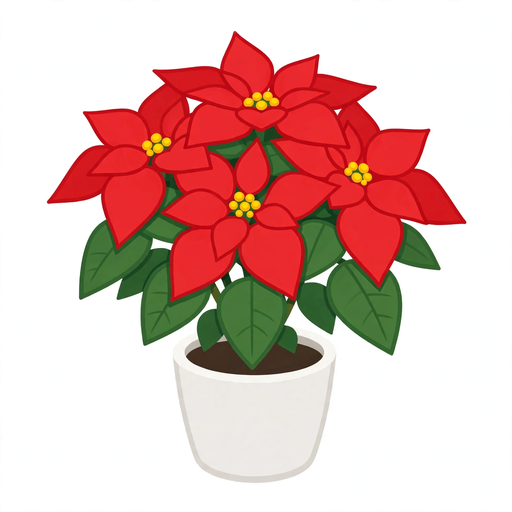 Poinsettia
Euphorbia pulcherrima
AI-assisted guide by the Eaoae editorial team · Last updated 2026-10-05 · Based on independent veterinary sources
Poinsettias are a classic holiday staple, but they are often unfairly blamed for severe pet poisoning. The reality is that while they are not completely harmless, they are far less toxic than many people fear, and serious issues are rare.
🚫 Keep away from
- Cats — Ingestion of the milky latex sap can cause mild gastrointestinal upset due to the presence of euphorbol esters.
- Dogs — Chewing on the leaves or stems may lead to drooling and vomiting because of the irritating sap.
- Birds — The sap can be irritating to sensitive avian digestive systems if ingested in significant quantities.
- Rabbits — Small herbivores like rabbits may experience mild stomach upset if they nibble on the foliage.
- Guinea Pigs — The plant's sap is not part of their natural diet and can cause mild digestive irritation.
✅ Generally fine for
- Reptiles — Most reptiles are not at significant risk from poinsettias, though it is best to keep them out of reach to prevent accidental ingestion.
👀 Signs to watch for
- Drooling or excessive salivation
- Mild vomiting or diarrhea
- Temporary loss of appetite
- Irritation or redness around the mouth
🔄 Pet-safe swaps
- Christmas Cactus — A festive, colorful option that is completely non-toxic to all common household pets.
- Amaryllis — While the bulbs are toxic, the flowers and leaves are generally considered safe for pets to view, though ingestion should still be avoided.
- Orchids — Elegant and long-lasting, orchids are non-toxic and add a sophisticated touch to holiday decor.
- Holly — Wait, holly is toxic. Let's swap that for a Pothos.
🪴 Care snapshot
- Light
- Bright indirect
- Water
- When surface dry (seasonal)
- Difficulty
- Moderate
📚 Sources & further reading
Plant guides are compiled for reference and may be incomplete — always confirm with your vet for your individual pet. Spotted an error? Let us know.
Important: always confirm the botanical name — common names vary by region,
and lists like these are a starting point, not a complete safety manual.
For reference only — not veterinary advice. In an emergency, contact your vet immediately.




