Home · Thanksgiving Pet Hazards
🦃 Thanksgiving Pet Hazards: 8 Dangers to Keep Away From Dogs & Cats
A roast turkey on the table, pies cooling on the counter, guests coming and going all afternoon — Thanksgiving is the biggest food holiday of the year, and that makes it one of the most dangerous days for curious pets. Here are the eight hazards veterinarians warn about most, what to do if one happens, and where to check anything else.
Published October 12, 2026. Seasonal guide.
1. Turkey Bones
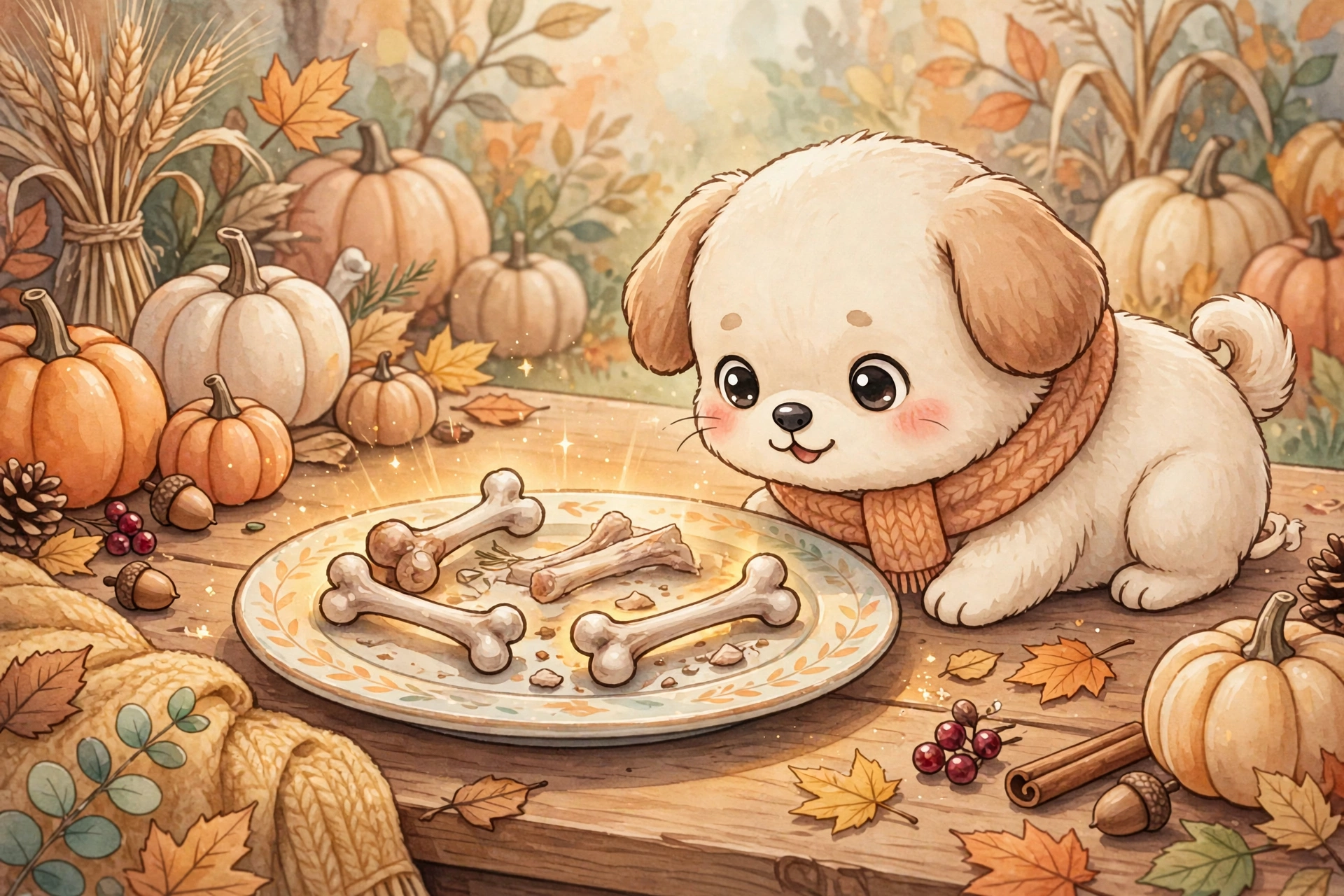
Cooked turkey bones are brittle. They splinter into sharp shards that can choke a pet, tear the throat or intestines, or wedge into the digestive tract and cause a life-threatening blockage. This is the number-one Thanksgiving emergency vets see — and it happens after dinner, when bones end up in trash cans pets can nose open.
- Watch for: choking, drooling, pawing at the mouth, vomiting, bloody stool, straining to defecate, a swollen or painful belly.
- What to do: do not try to pull a lodged bone out yourself. Bag the trash immediately so no more bones are reachable, note roughly how many were eaten and when, and call your vet at once. Never give bones "just this once" — the risk is the same every time.
2. Onion & Garlic (Stuffing, Gravy, Mashed Potatoes)
Thanksgiving side dishes are loaded with alliums. Onion and garlic — whether raw, cooked, powdered, or hiding in stuffing, gravy, and mashed potatoes — damage pets' red blood cells and can cause hemolytic anemia. Cats are even more sensitive than dogs, and the poisoning can take days to show up, which makes it easy to miss the connection.
- Watch for: vomiting, diarrhea, lethargy, pale gums, rapid breathing, dark or reddish urine, 1–5 days after eating.
- What to do: keep all seasoned dishes strictly off-limits — a "small bite" of stuffing can contain enough onion powder to matter for a small pet. If any was eaten, call your vet; bloodwork may be needed even if your pet seems fine at first.
Check: is garlic safe for dogs? →
Check: is onion safe for cats? →
3. Xylitol in Sugar-Free Desserts

Sugar-free pies, cookies, and candies sweetened with xylitol — increasingly labeled "birch sugar" — are among the most acutely poisonous things a dog can eat. Xylitol triggers a massive insulin release, crashing blood sugar within 30 minutes, and can cause liver failure. A single sugar-free cookie can be an emergency for a small dog.
- Watch for: vomiting, weakness, stumbling, collapse, tremors, seizures — often within 30 minutes.
- What to do: treat any xylitol ingestion as an emergency. Check ingredient labels on every dessert before the holiday, keep sugar-free items in closed containers, and call your vet immediately if any is eaten.
4. Chocolate Desserts
Chocolate pecan pie, brownies, fudge — Thanksgiving dessert tables are a chocolate minefield. Chocolate contains theobromine and caffeine, which dogs and cats metabolize very slowly. Dark and baking chocolate are far more dangerous than milk chocolate, and the rich, fatty recipes make the dose worse.
- Watch for: vomiting, diarrhea, restlessness, rapid heart rate, tremors, seizures.
- What to do: note what kind of chocolate and roughly how much was eaten, then call your vet. Do not wait for symptoms — by the time they appear, treatment is harder.
Check: is chocolate safe for cats? →
5. Fatty Foods & Turkey Skin
Turkey skin, drippings, butter-laden mashed potatoes, and gravy are not acutely poisonous — but a single rich, fatty meal can trigger pancreatitis in dogs, a painful inflammation of the pancreas that often needs hospitalization. Small breeds and dogs with a history of digestive trouble are at highest risk. The danger is dose-dependent: a stolen strip of turkey skin is the classic trigger.
- Watch for: repeated vomiting, loss of appetite, hunched posture or belly pain, lethargy, 12–72 hours after the meal.
- What to do: keep fatty scraps out of reach and ask guests not to slip the dog "just a little." If vomiting starts after a rich meal, call your vet — pancreatitis gets worse fast without treatment.
6. Raw Yeast Dough
Dough left to rise on the counter is a double threat. In the warm stomach, yeast keeps fermenting: it produces ethanol, which can cause alcohol poisoning, and expanding gas, which can bloat the stomach painfully — in large, deep-chested dogs, even twist it (gastric dilatation-volvulus, a surgical emergency). Baked bread is fine; raw rising dough is not.
- Watch for: a rapidly swelling belly, retching without producing vomit, restlessness, stumbling or disorientation (alcohol effect).
- What to do: this is always urgent — a bloated, unproductive-retching dog needs the emergency vet immediately. Keep rising dough behind closed doors, not just on a high counter.
7. Alcohol Left Within Reach
Wine glasses on coffee tables, beer bottles on the floor by the couch, rum in the eggnog — holiday gatherings scatter alcohol at exactly pet height. Dogs and cats are far more sensitive to alcohol than people: even small amounts can cause dangerous drops in blood sugar, blood pressure, and body temperature.
- Watch for: stumbling, disorientation, vomiting, slow breathing, collapse.
- What to do: clear glasses as the party goes, don't leave drinks on low tables, and keep trash with alcohol-soaked items secured. Any ingestion warrants a vet call.
Check: is alcohol safe for cats? →
8. The Guest-Season Game Plan

Thanksgiving isn't just a food holiday — it's a people holiday, and that brings its own risks. Guests' purses and coat pockets often contain medications, sugar-free gum, and chocolate. Doors open constantly for arrivals, and a frightened pet can slip out unnoticed into the dark.
- Before guests arrive: set up a quiet room with water, a bed, and a white-noise source; put a sign on the door asking guests to keep it closed.
- Medications: ask guests to keep purses and pill organizers in a closed bedroom — a single dropped pill can be an emergency.
- Doors: brief everyone on the "one door at a time" rule, and double-check collars, tags, and microchip registration before the holiday.
Browse all cat safety checks →
🆘 If you think your pet ate something dangerous
- Stay calm and act fast. Note what was eaten, how much, and when — this information saves critical minutes.
- Call your veterinarian immediately. If it's after hours, call the nearest emergency animal hospital.
- US: the ASPCA Animal Poison Control Center at (888) 426-4435 (a consultation fee may apply) or the Pet Poison Helpline at (855) 764-7661.
- Do not induce vomiting unless a veterinarian specifically tells you to — it can make some poisonings worse.
Eaoae is a reference safety checker, not a substitute for veterinary advice. When in doubt, call your vet — minutes matter with poisonings.
📚 Sources
- ASPCA: Pet Safety Tips for the Holiday Season (Dr. Tina Wismer, APCC)
- AKC: Can Dogs Eat Turkey?
- ASPCA: Thanksgiving Safety Tips for Pets
- Pet Poison Helpline: Bread Dough
- VCA: Bread Dough Poisoning in Dogs
- ASPCA: Holiday Baking Advisory — Dangers of Dough
- VCA: Pancreatitis in Dogs
- PetMD: Dog Food and Pancreatitis
- Pet Poison Helpline: Chocolate
- Pet Poison Helpline: Xylitol
- Pet Poison Helpline: Onion
- Pet Poison Helpline: Garlic
- Pet Poison Helpline: Alcohol




