Home · Plant guide · Dieffenbachia
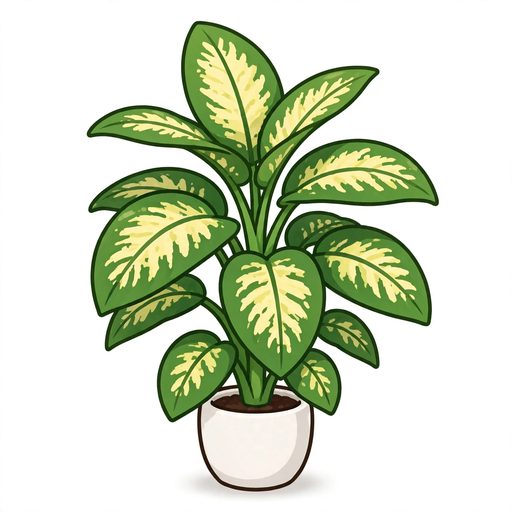 Dieffenbachia
 seguine
AI-assisted guide by the Eaoae editorial team · Last updated 2026-10-05 · Based on independent veterinary sources
Dieffenbachia, often called the dumb cane, is a very popular indoor houseplant known for its large, variegated leaves. It is highly toxic to most common household pets, so it should be kept out of reach if you have curious animals at home.
🚫 Keep away from
- Cats — Chewing the leaves causes immediate oral irritation and swelling due to calcium oxalate crystals.
- Dogs — Ingestion leads to drooling, difficulty swallowing, and potential respiratory distress from calcium oxalate.
- Birds — Birds are particularly sensitive to the calcium oxalate crystals, which can cause severe mouth and throat swelling.
- Rabbits — Small mammals like rabbits experience intense oral pain and drooling from the plant's toxic compounds.
- Guinea Pigs — Chewing on the foliage results in immediate irritation and swelling of the mouth and tongue.
- Reptiles — While less common, reptiles that ingest the plant may suffer from oral irritation and digestive upset.
👀 Signs to watch for
- Excessive drooling or foaming at the mouth
- Swelling of the tongue, lips, or throat
- Difficulty swallowing or breathing
- Vomiting or diarrhea
- Pain or sensitivity in the mouth
🔄 Pet-safe swaps
- Spider Plant — A hardy, easy-to-care-for plant that looks similar in texture but is completely non-toxic.
- Boston Fern — Provides lush, green foliage that is safe for all common pets and adds a tropical feel.
- Parlor Palm — A great low-light option that mimics the look of a palm without the toxicity risks.
- Calathea — Offers beautiful patterned leaves similar to Dieffenbachia but is safe for cats and dogs.
🪴 Care snapshot
- Light
- Medium indirect
- Water
- Keep lightly moist
- Difficulty
- Moderate
📚 Sources & further reading
Plant guides are compiled for reference and may be incomplete — always confirm with your vet for your individual pet. Spotted an error? Let us know.
Important: always confirm the botanical name — common names vary by region,
and lists like these are a starting point, not a complete safety manual.
For reference only — not veterinary advice. In an emergency, contact your vet immediately.




