Home · Halloween Pet Hazards
🎃 Halloween Pet Hazards: 6 Dangers to Keep Away From Dogs & Cats
Candy bowls on low tables, wrappers on the floor, glow sticks in small hands, and a front door opening fifty times a night — Halloween is a minefield for curious pets. Here are the six hazards veterinarians warn about most, what to do if one happens, and where to check anything else.
Published October 10, 2026. Seasonal guide.
✓ Sources checked by the Eaoae Safety Review · 2026-10-28 · Based on independent veterinary sources

1. Chocolate
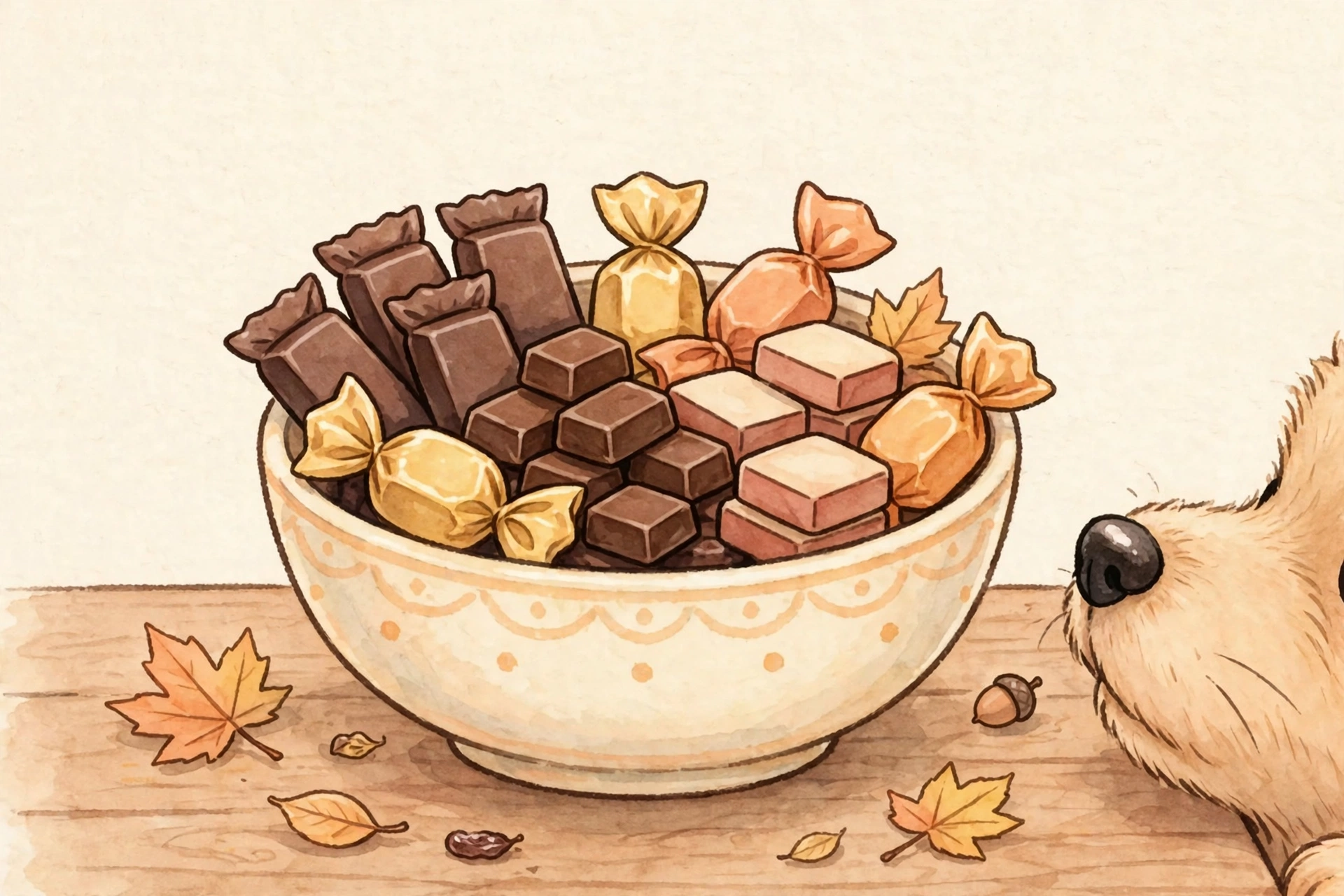
The classic Halloween danger. Chocolate contains theobromine and caffeine, which dogs and cats cannot metabolize well. Dark and baking chocolate are far more dangerous than milk chocolate — a small dog can be poisoned by a single baking-chocolate bar.
- Watch for: vomiting, diarrhea, restlessness, rapid heart rate, tremors, seizures.
- What to do: note what kind and how much was eaten, then call your vet immediately. Do not wait for symptoms.
Check: is chocolate safe for cats? →
2. Xylitol (also sold as Birch Sugar)
Sugar-free candy and gum sweetened with xylitol — now often labeled "birch sugar" — can cause a rapid, life-threatening drop in blood sugar and liver failure in dogs. Even small amounts are an emergency.
- Watch for: vomiting, weakness, collapse, tremors within 30 minutes.
- What to do: treat any xylitol ingestion as an emergency — call your vet at once.
Tool: xylitol toxicity calculator for dogs →
3. Raisin Snack Packs
Those mini boxes of raisins handed out as "healthy" treats are extremely poisonous to dogs. Grapes, raisins, and currants can cause sudden kidney failure — and there is no known safe amount.
- Watch for: vomiting, lethargy, loss of appetite, decreased urination within 24 hours.
- What to do: any ingestion is a potential poisoning — contact your vet immediately.
Emergency guide: grapes & raisins — any amount is an emergency →
4. Candy Wrappers
When pets raid the candy bowl, they swallow the wrappers too. Foil and cellophane wrappers can wad up and cause a life-threatening bowel obstruction that may need surgery to fix.
- Watch for: vomiting, decreased appetite, not defecating, straining, lethargy.
- What to do: do not try to induce vomiting yourself — call your vet, who may recommend X-rays or ultrasound.
5. Glow Sticks & Glow Jewelry
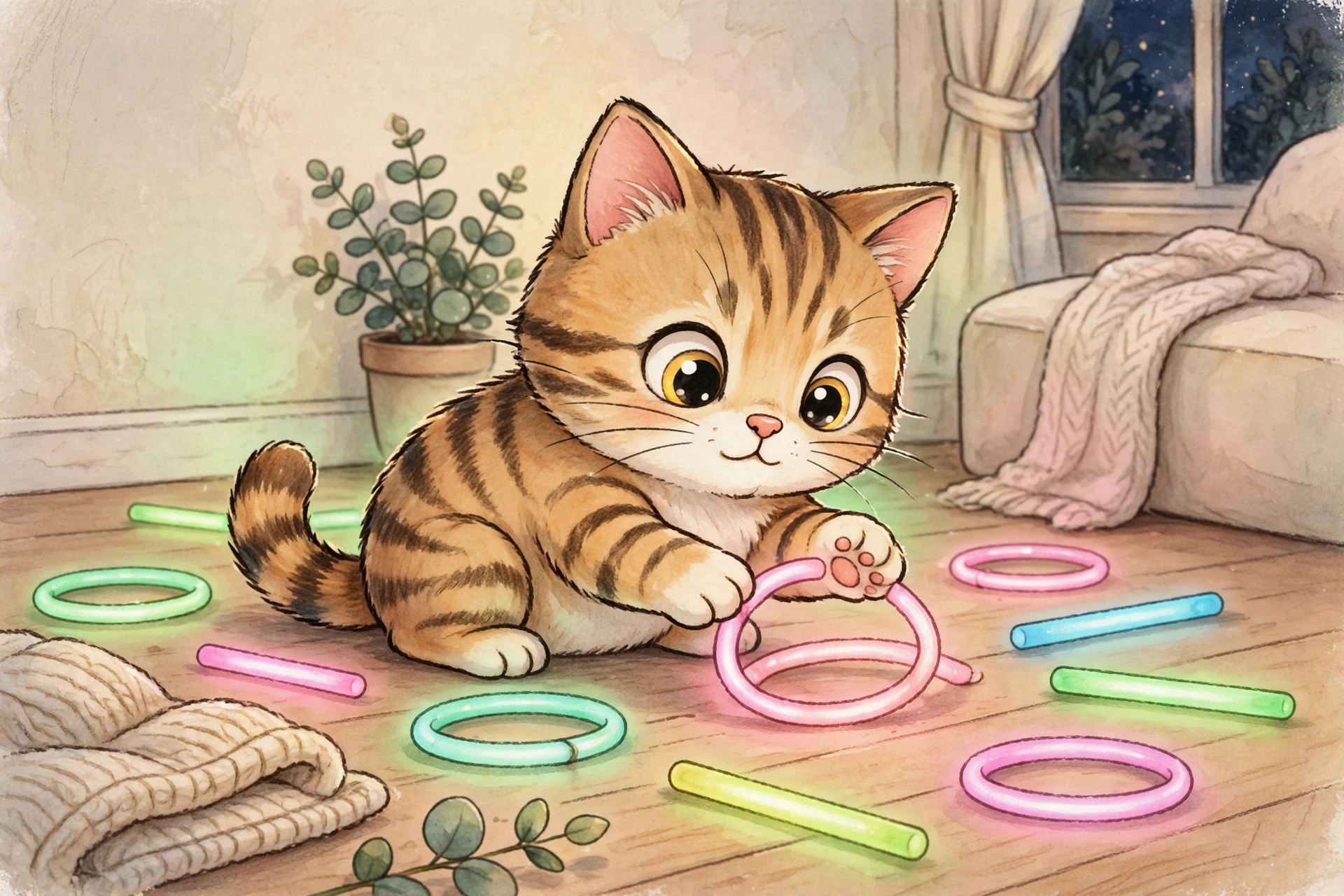
Glow sticks contain dibutyl phthalate, an intensely bitter liquid. It is rarely deadly, but one bite makes most pets drool profusely, paw at the mouth, and sometimes retch — alarming to watch.
- What to do: offer (don't force) a little water or a tasty treat to wash out the bitter taste, and wipe any liquid off fur and paws. If drooling won't stop, eyes look red, or appetite drops, call your vet.
6. The Doorbell Escape Plan
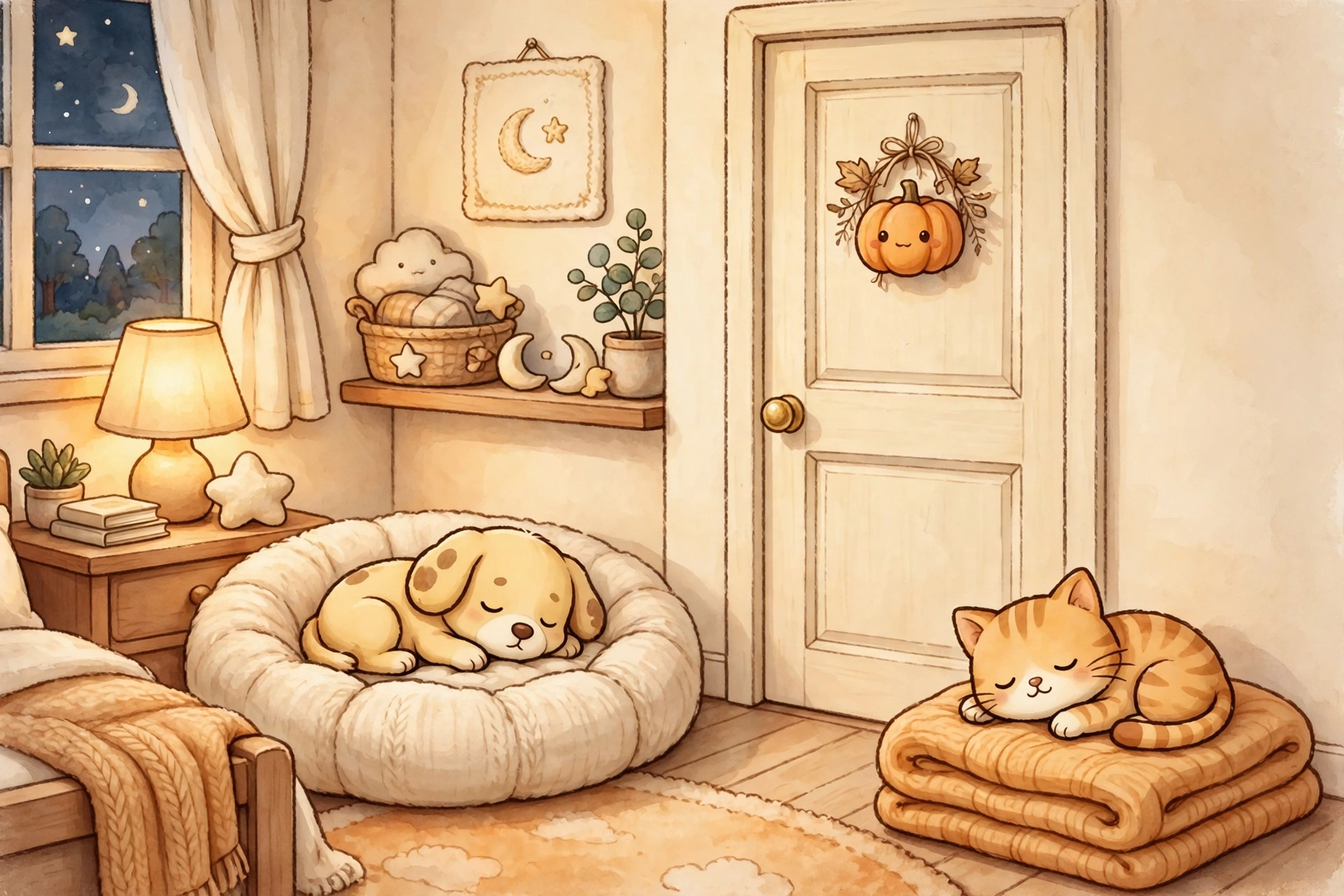
The most common Halloween pet emergency isn't poisoning — it's a pet bolting through an open door. Fifty doorbell rings a night is a recipe for a lost dog or cat.
- Before dark: move pets to a quiet closed room with water, a bed, and something to chew. Play background music or white noise.
- ID check: make sure collars, tags, and microchip details are current — tonight of all nights.
- Trick-or-treating together? most pets are happier at home. If yours comes along, use a secure leash (not retractable), skip the costume if they hate it, and watch the ground for dropped candy.
🆘 If you think your pet ate something dangerous
Don't wait for symptoms. Contact your veterinarian immediately, or reach the ASPCA Animal Poison Control or the Pet Poison Helpline for 24/7 toxicology advice.
📚 Sources
- Pet Poison Helpline: Chocolate
- VCA: Chocolate Poisoning in Dogs
- PetMD: Can Dogs Eat Chocolate?
- Pet Poison Helpline: Xylitol
- VCA: Xylitol Toxicity in Dogs
- PetMD: Xylitol Poisoning in Dogs
- Pet Poison Helpline: Grapes
- VCA: Grape, Raisin and Currant Poisoning in Dogs
- ASPCA: People Foods to Avoid Feeding Your Pets (grapes & raisins)
- Pet Poison Helpline: Halloween Newsletter (wrappers & glow sticks)
- VCA: Ingestion of Foreign Bodies in Dogs
- PetMD: Dog Intestinal Blockage — Signs and What to Do
- Pet Poison Helpline: Top Cat Toxins (glow sticks)
- Washington State Dept. of Agriculture: What's With My Cat and Glow Sticks?




